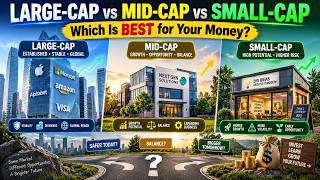
Large Cap vs Mid Cap vs Small Cap Stocks Which Is BEST for Your Money? 💰📈
リアクション
2026年09月12日
Large-Cap vs Mid-Cap vs Small-Cap Stocks — which one is right for you? 📈💰
If you've ever wondered why some stocks are called large-cap, mid-cap, or small-cap, this video breaks it down in simple, easy-to-understand language.
We'll explain what market capitalisation means and explore the key differences between large-cap, mid-cap, and small-cap stocks — including their potential growth, volatility, risk, liquidity, dividends, and role in a diversified portfolio.
You'll also learn:
✅ What market capitalisation actually means
✅ How large-cap stocks work
✅ Why mid-cap stocks can offer a balance between growth and maturity
✅ Why small-cap stocks can have higher growth potential and higher risk
✅ Whether small-cap stocks always outperform large-cap stocks
✅ How different stock categories may behave during recessions
✅ The connection between market cap and dividends
✅ Why market cap does NOT automatically mean quality
✅ What to analyse before buying a stock
✅ How diversification can help manage investment risk
✅ How beginners can think about large-, mid-, and small-cap investing
We'll also use examples relevant to investors around the world, including markets such as the United States, India, United Kingdom, Europe, Canada, and Australia.
Whether you're a beginner learning about stocks or an experienced investor reviewing your portfolio, understanding market-cap categories can help you make more informed investment decisions.
Watch until the end for the simple framework that explains how large-cap, mid-cap, and small-cap stocks can fit into a long-term investment strategy.
💬 Question for you:
Do you prefer large-cap, mid-cap, small-cap stocks — or a combination of all three?
Share your opinion in the comments!
🔔 Subscribe to BNR Universe for more investing, personal finance, stock market, retirement, and wealth-building content.
⚠️ Disclaimer
This video is for educational and informational purposes only and does not constitute financial, investment, tax, or legal advice.
Stocks, ETFs, mutual funds, and other investments involve risk. Their value can rise or fall, and you may lose some or all of your invested capital.
The companies and examples mentioned are for educational purposes only and should not be considered recommendations to buy, sell, or hold any security.
Past performance does not guarantee future results. Market-cap classifications may also vary depending on the country, index provider, and methodology used.
Always consider your individual financial situation, investment goals, risk tolerance, time horizon, and applicable local regulations before making investment decisions. Consider consulting a qualified financial professional where appropriate.
Invest responsibly and never invest money you cannot afford to lose.
#StockMarket #Investing #LargeCap #MidCap #SmallCap #Stocks #InvestingForBeginners #PersonalFinance #WealthBuilding #StockMarketForBeginners #LongTermInvesting #BNRUniverse
Disclaimer: The videos on this channel are strictly for educational purposes and do not constitute financial advice.
#PersonalFinance #Investing #BNRUniverse #Banking #Creditcard #Loans #Debt
If you've ever wondered why some stocks are called large-cap, mid-cap, or small-cap, this video breaks it down in simple, easy-to-understand language.
We'll explain what market capitalisation means and explore the key differences between large-cap, mid-cap, and small-cap stocks — including their potential growth, volatility, risk, liquidity, dividends, and role in a diversified portfolio.
You'll also learn:
✅ What market capitalisation actually means
✅ How large-cap stocks work
✅ Why mid-cap stocks can offer a balance between growth and maturity
✅ Why small-cap stocks can have higher growth potential and higher risk
✅ Whether small-cap stocks always outperform large-cap stocks
✅ How different stock categories may behave during recessions
✅ The connection between market cap and dividends
✅ Why market cap does NOT automatically mean quality
✅ What to analyse before buying a stock
✅ How diversification can help manage investment risk
✅ How beginners can think about large-, mid-, and small-cap investing
We'll also use examples relevant to investors around the world, including markets such as the United States, India, United Kingdom, Europe, Canada, and Australia.
Whether you're a beginner learning about stocks or an experienced investor reviewing your portfolio, understanding market-cap categories can help you make more informed investment decisions.
Watch until the end for the simple framework that explains how large-cap, mid-cap, and small-cap stocks can fit into a long-term investment strategy.
💬 Question for you:
Do you prefer large-cap, mid-cap, small-cap stocks — or a combination of all three?
Share your opinion in the comments!
🔔 Subscribe to BNR Universe for more investing, personal finance, stock market, retirement, and wealth-building content.
⚠️ Disclaimer
This video is for educational and informational purposes only and does not constitute financial, investment, tax, or legal advice.
Stocks, ETFs, mutual funds, and other investments involve risk. Their value can rise or fall, and you may lose some or all of your invested capital.
The companies and examples mentioned are for educational purposes only and should not be considered recommendations to buy, sell, or hold any security.
Past performance does not guarantee future results. Market-cap classifications may also vary depending on the country, index provider, and methodology used.
Always consider your individual financial situation, investment goals, risk tolerance, time horizon, and applicable local regulations before making investment decisions. Consider consulting a qualified financial professional where appropriate.
Invest responsibly and never invest money you cannot afford to lose.
#StockMarket #Investing #LargeCap #MidCap #SmallCap #Stocks #InvestingForBeginners #PersonalFinance #WealthBuilding #StockMarketForBeginners #LongTermInvesting #BNRUniverse
Disclaimer: The videos on this channel are strictly for educational purposes and do not constitute financial advice.
#PersonalFinance #Investing #BNRUniverse #Banking #Creditcard #Loans #Debt