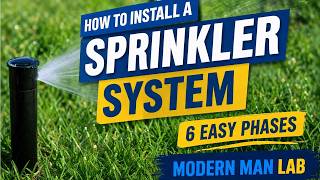
How to Install a Sprinkler System Step by Step (DIY Beginner Guide)
リアクション
2026年04月12日
**Learn how to install your own sprinkler system step by step with a complete DIY breakdown anyone can follow.** This video walks you through **6 easy phases**, plus a deep dive into **GPM, PSI, and exactly what supplies you need** so you can design and build your system the right way the first time.
---
## 🔧 The 6 Phases Covered:
**1. Planning Your Layout**
Measure your yard and sketch out zones. Plan for **head-to-head coverage** so every sprinkler reaches the next one. Decide between spray heads (smaller areas) or rotors (larger areas).
**2. Water Source (GPM & PSI Explained)**
This is the most important step.
* **GPM (Gallons Per Minute)** = how much water your system can supply
* **PSI (Pressure)** = how strong the water comes out
👉 **How to test GPM yourself:**
* Grab a 5-gallon bucket
* Turn on your outdoor spigot full blast
* Time how long it takes to fill
* Use this formula:
**5 ÷ seconds × 60 = your GPM**
👉 **How to check PSI:**
* Use a simple hose pressure gauge (cheap at any hardware store)
* Attach it to your spigot and turn water on
💡 **Why this matters:**
Your GPM determines **how many sprinkler heads per zone**, and PSI determines **how far they spray**. Too many heads = weak system.
---
**3. Trenching & Installing Pipe + Sprinklers**
* Dig trenches 8–12 inches deep
* Lay out your main line and lateral lines
* Space heads based on their spray distance (example: 10 ft head = 10 ft spacing)
* Keep everything level with the ground
---
**4. Valve Box & Wiring**
* Install valves in a valve box (one per zone)
* Run irrigation wire from valves to your controller
* Use **waterproof wire connectors** (very important)
* Label your zones to stay organized
---
**5. System Hookup & Testing**
* Connect to your main water line
* Turn system on zone by zone
* Check for leaks, pressure drops, or uneven spray
---
**6. Adjusting Your Sprinklers**
* Adjust spray pattern and distance
* Eliminate dry spots and overspray
* Fine-tune for even coverage across your lawn
---
## 🧰 COMPLETE DIY SUPPLIES LIST:
**Core System Parts:**
* PVC pipe (Schedule 40) *or* poly pipe
* Sprinkler heads (spray or rotor)
* Control valves (1 per zone)
* Valve box
* Backflow preventer (required in many areas)
* Irrigation controller/timer
**Fittings & Connections:**
* Tees, elbows, couplers
* Threaded adapters
* Swing pipe (for flexible head connections)
* Clamps (for poly systems)
**Sealants & Electrical:**
* PVC primer & cement (for PVC systems)
* Teflon tape (threaded fittings)
* Irrigation wire (multi-strand)
* Waterproof wire connectors
**Tools Needed:**
* Shovel or trenching machine
* Pipe cutter or PVC saw
* Tape measure
* Wire strippers
* Crimping tool
---
## 💡 DIY TIPS FOR SUCCESS:
* **Stay under your max GPM** (example: if you have 8 GPM, aim for 6–7 GPM usage per zone)
* **Use head-to-head spacing** for full coverage
* **Install a shutoff valve** before your system
* **Call 811 before digging** to avoid hitting utilities
---
## 🚀 What You’ll Walk Away With:
* A full understanding of how sprinkler systems actually work
* Confidence to design your own zones
* The ability to calculate GPM/PSI correctly
* A professional-level system you installed yourself
---
If this helped you, drop a like and subscribe to **Modern Man Lab** for more real-world DIY projects that actually save you money.
---
## 🔧 The 6 Phases Covered:
**1. Planning Your Layout**
Measure your yard and sketch out zones. Plan for **head-to-head coverage** so every sprinkler reaches the next one. Decide between spray heads (smaller areas) or rotors (larger areas).
**2. Water Source (GPM & PSI Explained)**
This is the most important step.
* **GPM (Gallons Per Minute)** = how much water your system can supply
* **PSI (Pressure)** = how strong the water comes out
👉 **How to test GPM yourself:**
* Grab a 5-gallon bucket
* Turn on your outdoor spigot full blast
* Time how long it takes to fill
* Use this formula:
**5 ÷ seconds × 60 = your GPM**
👉 **How to check PSI:**
* Use a simple hose pressure gauge (cheap at any hardware store)
* Attach it to your spigot and turn water on
💡 **Why this matters:**
Your GPM determines **how many sprinkler heads per zone**, and PSI determines **how far they spray**. Too many heads = weak system.
---
**3. Trenching & Installing Pipe + Sprinklers**
* Dig trenches 8–12 inches deep
* Lay out your main line and lateral lines
* Space heads based on their spray distance (example: 10 ft head = 10 ft spacing)
* Keep everything level with the ground
---
**4. Valve Box & Wiring**
* Install valves in a valve box (one per zone)
* Run irrigation wire from valves to your controller
* Use **waterproof wire connectors** (very important)
* Label your zones to stay organized
---
**5. System Hookup & Testing**
* Connect to your main water line
* Turn system on zone by zone
* Check for leaks, pressure drops, or uneven spray
---
**6. Adjusting Your Sprinklers**
* Adjust spray pattern and distance
* Eliminate dry spots and overspray
* Fine-tune for even coverage across your lawn
---
## 🧰 COMPLETE DIY SUPPLIES LIST:
**Core System Parts:**
* PVC pipe (Schedule 40) *or* poly pipe
* Sprinkler heads (spray or rotor)
* Control valves (1 per zone)
* Valve box
* Backflow preventer (required in many areas)
* Irrigation controller/timer
**Fittings & Connections:**
* Tees, elbows, couplers
* Threaded adapters
* Swing pipe (for flexible head connections)
* Clamps (for poly systems)
**Sealants & Electrical:**
* PVC primer & cement (for PVC systems)
* Teflon tape (threaded fittings)
* Irrigation wire (multi-strand)
* Waterproof wire connectors
**Tools Needed:**
* Shovel or trenching machine
* Pipe cutter or PVC saw
* Tape measure
* Wire strippers
* Crimping tool
---
## 💡 DIY TIPS FOR SUCCESS:
* **Stay under your max GPM** (example: if you have 8 GPM, aim for 6–7 GPM usage per zone)
* **Use head-to-head spacing** for full coverage
* **Install a shutoff valve** before your system
* **Call 811 before digging** to avoid hitting utilities
---
## 🚀 What You’ll Walk Away With:
* A full understanding of how sprinkler systems actually work
* Confidence to design your own zones
* The ability to calculate GPM/PSI correctly
* A professional-level system you installed yourself
---
If this helped you, drop a like and subscribe to **Modern Man Lab** for more real-world DIY projects that actually save you money.