Magna Carta's Hidden Origin: One Woman's Final Days
リアクション
2026年07月06日
In 1210, King John of England locked a mother and her son in a castle cell with a sheaf of oats and a piece of raw bacon — and never opened the door again. Her name was Maud de Braose (Matilda de Briouze), wife of the most powerful Marcher baron in England. Her family knew what happened to Prince Arthur of Brittany, the king's nephew who vanished from Rouen Castle in 1203. And when Maud said it out loud, King John didn't answer with a trial or a sword. He answered with a debt.
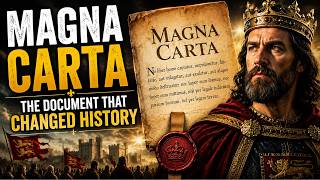
This documentary follows the destruction of England's mightiest baronial family in just three years — through the exchequer records, the chronicle of a Welsh abbey, and the most chilling document of King John's reign: the king's own written justification, preserved in the treasury's Black Book, claiming he acted "by the law of our exchequer." Five years later, the barons answered him at Runnymede: Magna Carta, clause 39 — no free man shall be imprisoned except by the lawful judgment of his equals or by the law of the land.
A story of medieval England, royal revenge, and how one woman's death by starvation helped write the most famous legal document in history.
⏱ CHAPTERS
0:00 – A sheaf of oats and a locked door
0:39 – Who was Maud de Braose?
1:21 – Three questions, one meadow: Runnymede
2:05 – The Braose empire: castles on three coastlines
4:25 – The invisible weapon: baronial debt and the exchequer
6:16 – Prince Arthur of Brittany: the murder the family knew about
8:56 – 1208: the sentence that destroyed everything
10:42 – The collapse: from the Welsh Marches to Ireland in chains
12:30 – Bristol: the 40,000-mark settlement
13:59 – Windsor or Corfe: eleven days behind a sealed door
16:21 – The king's paperwork: the Complaint of 1210
18:04 – What happened to the family
19:10 – Magna Carta, clause 39: the law of the land
20:55 – The evidence that outlived the king
📚 SOURCES
This episode is built exclusively on primary sources and peer-reviewed scholarship. Where the records disagree — the castle (Windsor vs Corfe), the death scene (a single hostile source) — the video says so openly.
Primary sources:
The Complaint (querimonia) of King John against William de Briouze, c. September 1210 — Black Book of the Exchequer; ed. & trans. David Crouch, in J. S. Loengard (ed.), "Magna Carta and the England of King John" (Boydell, 2010)
Histoire des ducs de Normandie et des rois d'Angleterre (anonymous, c. 1220s) — ed. Francisque Michel (Paris, 1840), pp. 112–115
Annals of Margam Abbey — Annales Monastici, ed. H. R. Luard (Rolls Series), vol. I, p. 118
Roger of Wendover, Flores Historiarum (Rolls Series)
Brut y Tywysogyon — the Chronicle of the Welsh Princes (ed. T. Jones, Cardiff)
Magna Carta, 1215, clause 39
Letters patent of 10 October 1216 (Patent Rolls, 18 John) — the Aconbury grant
Scholarship:
Colin Veach, "King John and Royal Control in Ireland: Why William de Briouze Had to Be Destroyed," English Historical Review 129 (2014)
Brock W. Holden, "King John, the Braoses, and the Celtic Fringe, 1207–1216," Albion 33 (2001)
Seán Duffy, "King John's Expedition to Ireland, 1210: The Evidence Reconsidered," Irish Historical Studies
J. C. Holt, "Magna Carta" (Cambridge UP) and "The Northerners" (Oxford)
Sidney Painter, "The Reign of King John" (Johns Hopkins, 1949)
J. E. A. Jolliffe, "Angevin Kingship" (1955)
R. V. Turner, "Briouze, William de (d. 1211)," Oxford Dictionary of National Biography
⚠ Content note: this video discusses historical imprisonment and death by starvation, presented for educational purposes with restraint and full source attribution.
#MedievalHistory #KingJohn #MagnaCarta #MaudDeBraose #PrinceArthur #History #Documentary
This documentary follows the destruction of England's mightiest baronial family in just three years — through the exchequer records, the chronicle of a Welsh abbey, and the most chilling document of King John's reign: the king's own written justification, preserved in the treasury's Black Book, claiming he acted "by the law of our exchequer." Five years later, the barons answered him at Runnymede: Magna Carta, clause 39 — no free man shall be imprisoned except by the lawful judgment of his equals or by the law of the land.
A story of medieval England, royal revenge, and how one woman's death by starvation helped write the most famous legal document in history.
⏱ CHAPTERS
0:00 – A sheaf of oats and a locked door
0:39 – Who was Maud de Braose?
1:21 – Three questions, one meadow: Runnymede
2:05 – The Braose empire: castles on three coastlines
4:25 – The invisible weapon: baronial debt and the exchequer
6:16 – Prince Arthur of Brittany: the murder the family knew about
8:56 – 1208: the sentence that destroyed everything
10:42 – The collapse: from the Welsh Marches to Ireland in chains
12:30 – Bristol: the 40,000-mark settlement
13:59 – Windsor or Corfe: eleven days behind a sealed door
16:21 – The king's paperwork: the Complaint of 1210
18:04 – What happened to the family
19:10 – Magna Carta, clause 39: the law of the land
20:55 – The evidence that outlived the king
📚 SOURCES
This episode is built exclusively on primary sources and peer-reviewed scholarship. Where the records disagree — the castle (Windsor vs Corfe), the death scene (a single hostile source) — the video says so openly.
Primary sources:
The Complaint (querimonia) of King John against William de Briouze, c. September 1210 — Black Book of the Exchequer; ed. & trans. David Crouch, in J. S. Loengard (ed.), "Magna Carta and the England of King John" (Boydell, 2010)
Histoire des ducs de Normandie et des rois d'Angleterre (anonymous, c. 1220s) — ed. Francisque Michel (Paris, 1840), pp. 112–115
Annals of Margam Abbey — Annales Monastici, ed. H. R. Luard (Rolls Series), vol. I, p. 118
Roger of Wendover, Flores Historiarum (Rolls Series)
Brut y Tywysogyon — the Chronicle of the Welsh Princes (ed. T. Jones, Cardiff)
Magna Carta, 1215, clause 39
Letters patent of 10 October 1216 (Patent Rolls, 18 John) — the Aconbury grant
Scholarship:
Colin Veach, "King John and Royal Control in Ireland: Why William de Briouze Had to Be Destroyed," English Historical Review 129 (2014)
Brock W. Holden, "King John, the Braoses, and the Celtic Fringe, 1207–1216," Albion 33 (2001)
Seán Duffy, "King John's Expedition to Ireland, 1210: The Evidence Reconsidered," Irish Historical Studies
J. C. Holt, "Magna Carta" (Cambridge UP) and "The Northerners" (Oxford)
Sidney Painter, "The Reign of King John" (Johns Hopkins, 1949)
J. E. A. Jolliffe, "Angevin Kingship" (1955)
R. V. Turner, "Briouze, William de (d. 1211)," Oxford Dictionary of National Biography
⚠ Content note: this video discusses historical imprisonment and death by starvation, presented for educational purposes with restraint and full source attribution.
#MedievalHistory #KingJohn #MagnaCarta #MaudDeBraose #PrinceArthur #History #Documentary


![[日本保守党]※神回 記者に恐怖の逆質問。「君たちはどう思うんや?」これぞ日本保守党の記者会見![百田尚樹 北村晴男 有本香]](https://img.youtube.com/vi/_gG5ePFFiR0/mqdefault.jpg)