China SOLD OFF $42.2B in US Debt s Bessent Scrambles for $671B
リアクション
2026年06月23日
China cut its oil imports by around 40% in May, from roughly 11 million barrels per day to barely 7 million, helping prevent the energy shock from becoming even more severe. Beijing relied more heavily on domestic reserves instead of competing for limited global supplies, while Russia also avoided direct involvement in the conflict. This restraint reduced the risk of a larger surge in crude prices, transport costs, and consumer inflation.
At the same time, the technological confrontation between China and the United States is intensifying. The gap between leading American and Chinese AI models has reportedly narrowed to about 10%, while US companies and the government are preparing to spend roughly $5 trillion on AI infrastructure, chips, data centers, and computing power. Washington has also accused China of obtaining advanced EUV lithography technology, although ASML says none of its 314 EUV machines operate in China. China still generates nearly 20% of ASML’s revenue, worth about $1.6 billion.
Chinese AI-chip companies could nearly triple their combined revenue by 2030, rising from approximately 150 billion yuan to more than 400 billion yuan. Huawei, Cambricon, and other domestic firms are benefiting from state support, bank financing, export income, and enormous local demand. Meanwhile, US technology companies are borrowing tens of billions of dollars, with AI investment at some firms approaching 100% of operating cash flow.
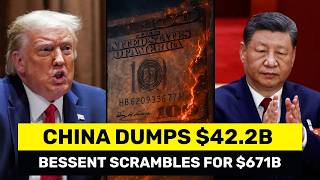
China is also reducing its exposure to US government debt. Its Treasury holdings fell by more than $42 billion over three months and are now near levels last seen in 2008. Treasury Secretary Scott Bessent must raise more than $670 billion during the third quarter, while Hong Kong is preparing futures tied to Chinese government bonds to make RMB assets more attractive to international investors.
Pressure is also building from private borrowing. SpaceX may issue at least $20 billion in bonds, with projections placing its total debt between $400 billion and $700 billion by 2031. Its shares have already fallen nearly 15%, erasing around $600 billion in market value before major insider lockups expire.
With Cushing oil inventories near 20 million barrels, inflation risks remain elevated. Further Federal Reserve rate hikes would increase borrowing costs for the Treasury, Big Tech, SpaceX, and the wider stock market.
#China #ASML #UStreasury
_______________________________________
Interesting videos:
U.S. Demands BRICS Cancel Non-Dollar Trade
https://youtu.be/_xGK24WuYTA
U.S. Lied to China — Now China’s Getting Revenge by Dumping DOLLARS!
https://youtu.be/eEdsEyXvidk
China Just Formed a New $25 Trillion Alliance Bigger than BRICS
https://youtu.be/MXZaIGhvtuI
$40 Trillion Market GONE? China Cancels Trade in USD!
https://youtu.be/wN9ZHlAUwkQ
_______________________________________
Disclaimer: The information presented on this channel should not be interpreted or relied upon as professional advice for any specific fact or circumstance. This channel and its content are meant for entertainment and informational purposes only. The content provided offers a general overview of a topic and is not a replacement for professional services. Always seek the guidance of a finance or legal professional who can address your specific situation. The opinions expressed are solely my own, and only publicly available information has been used.
At the same time, the technological confrontation between China and the United States is intensifying. The gap between leading American and Chinese AI models has reportedly narrowed to about 10%, while US companies and the government are preparing to spend roughly $5 trillion on AI infrastructure, chips, data centers, and computing power. Washington has also accused China of obtaining advanced EUV lithography technology, although ASML says none of its 314 EUV machines operate in China. China still generates nearly 20% of ASML’s revenue, worth about $1.6 billion.
Chinese AI-chip companies could nearly triple their combined revenue by 2030, rising from approximately 150 billion yuan to more than 400 billion yuan. Huawei, Cambricon, and other domestic firms are benefiting from state support, bank financing, export income, and enormous local demand. Meanwhile, US technology companies are borrowing tens of billions of dollars, with AI investment at some firms approaching 100% of operating cash flow.
China is also reducing its exposure to US government debt. Its Treasury holdings fell by more than $42 billion over three months and are now near levels last seen in 2008. Treasury Secretary Scott Bessent must raise more than $670 billion during the third quarter, while Hong Kong is preparing futures tied to Chinese government bonds to make RMB assets more attractive to international investors.
Pressure is also building from private borrowing. SpaceX may issue at least $20 billion in bonds, with projections placing its total debt between $400 billion and $700 billion by 2031. Its shares have already fallen nearly 15%, erasing around $600 billion in market value before major insider lockups expire.
With Cushing oil inventories near 20 million barrels, inflation risks remain elevated. Further Federal Reserve rate hikes would increase borrowing costs for the Treasury, Big Tech, SpaceX, and the wider stock market.
#China #ASML #UStreasury
_______________________________________
Interesting videos:
U.S. Demands BRICS Cancel Non-Dollar Trade
https://youtu.be/_xGK24WuYTA
U.S. Lied to China — Now China’s Getting Revenge by Dumping DOLLARS!
https://youtu.be/eEdsEyXvidk
China Just Formed a New $25 Trillion Alliance Bigger than BRICS
https://youtu.be/MXZaIGhvtuI
$40 Trillion Market GONE? China Cancels Trade in USD!
https://youtu.be/wN9ZHlAUwkQ
_______________________________________
Disclaimer: The information presented on this channel should not be interpreted or relied upon as professional advice for any specific fact or circumstance. This channel and its content are meant for entertainment and informational purposes only. The content provided offers a general overview of a topic and is not a replacement for professional services. Always seek the guidance of a finance or legal professional who can address your specific situation. The opinions expressed are solely my own, and only publicly available information has been used.