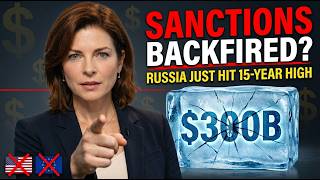
The "SANCTIONS DESTROYED RUSSIA" LIE — It Just Posted Its Highest GDP Growth in 15 Years
リアクション
2026年06月15日
In 2022, the G7 called it economic warfare. The IMF projected cumulative contraction of eight to ten percent. The ruble was declared rubble. Three years later, Russia posted four point six percent GDP growth — the highest rate in fifteen years — and the institutions that built those forecasts have been quietly revising their methodology without revising their credibility.
This video runs the numbers they buried in the footnotes. What the sanctions actually hit. What the war economy replaced. Why the forecasting models excluded a variable that was documentable before the first package was signed. And what the asset freeze — not the trade restrictions — may have permanently damaged in ways that have nothing to do with Russia.
The verdict is not that sanctions don't work. The verdict is more specific than that — and more damaging to the people who designed this particular package.
Sources cited: — Rosstat GDP and household consumption data, 2023 — World Bank Russia Economic Report, June 2023 — IMF COFER Database, Q4 2023 — IEA Gas Market Report, 2023 — Russia Ministry of Finance Budget Execution Statement, 2023 — Russia Federal Customs Service parallel import data, 2023 — BOFIT Working Paper: "Russia's Economy in the Shadow of War," March 2022 — BIS Quarterly Review, March 2023 — U.S. Treasury TIC Data, 2021–2023 — Kyiv School of Economics shadow fleet analysis, 2023 — Romir Research Group consumer price tracking, 2023 — Higher School of Economics Russia wage monitoring project, 2023
#Russia #Sanctions #RussiaEconomy #GDP #Geopolitics #EconomicWarfare #Ukraine #G7 #IMF #DollarDominance #SWIFT #OilPrices #GlobalEconomy #Dedollarization #WarEconomy #Geopolitical Analysis #RussiaUkraineWar #CentralBanks #ForeignReserves #EnergyMarkets
This video runs the numbers they buried in the footnotes. What the sanctions actually hit. What the war economy replaced. Why the forecasting models excluded a variable that was documentable before the first package was signed. And what the asset freeze — not the trade restrictions — may have permanently damaged in ways that have nothing to do with Russia.
The verdict is not that sanctions don't work. The verdict is more specific than that — and more damaging to the people who designed this particular package.
Sources cited: — Rosstat GDP and household consumption data, 2023 — World Bank Russia Economic Report, June 2023 — IMF COFER Database, Q4 2023 — IEA Gas Market Report, 2023 — Russia Ministry of Finance Budget Execution Statement, 2023 — Russia Federal Customs Service parallel import data, 2023 — BOFIT Working Paper: "Russia's Economy in the Shadow of War," March 2022 — BIS Quarterly Review, March 2023 — U.S. Treasury TIC Data, 2021–2023 — Kyiv School of Economics shadow fleet analysis, 2023 — Romir Research Group consumer price tracking, 2023 — Higher School of Economics Russia wage monitoring project, 2023
#Russia #Sanctions #RussiaEconomy #GDP #Geopolitics #EconomicWarfare #Ukraine #G7 #IMF #DollarDominance #SWIFT #OilPrices #GlobalEconomy #Dedollarization #WarEconomy #Geopolitical Analysis #RussiaUkraineWar #CentralBanks #ForeignReserves #EnergyMarkets