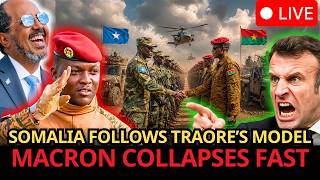
MACRON’S Worst Nightmare: SOMALIA Turns To TRAORE’S Military Doctrine
リアクション
2026年05月22日
AFRICA RISING VIEW brings you another powerful story shaping the future of the continent. As Somalia reaches out to Burkina Faso for deeper security cooperation, many Africans are beginning to ask a historic question: Is a new era of African-led resistance finally emerging?
For decades, nations across the Sahel and East Africa depended heavily on foreign military partnerships to combat terrorism and instability. Yet despite billions in international support, extremist violence continued spreading, communities remained vulnerable, and trust in outside intervention slowly weakened. Today, a different conversation is taking place across the continent.
Under the leadership of Captain IbrahimTraore, Burkina Faso has become one of the most closely watched countries in Africa new political discussions. What makes this moment remarkable is not the claim that Burkina Faso has solved terrorism, but the determination to build a model based on sovereignty, local mobilization, and African cooperation instead of permanent dependency.
Somalia’s decision to strengthen ties with Burkina Faso surprised many international observers. However, for millions of Africans, the message was clear. A country once described only through conflict and instability is now being viewed as a potential source of inspiration for regional security partnerships.
This growing attention reflects deeper frustrations that have developed over many years. Across the Sahel, citizens watched foreign-backed military operations continue while insecurity expanded into villages, farms, and schools. Families were displaced, economies weakened, and entire generations grew up surrounded by uncertainty. In this environment, Ibrahim Traore emerged as a symbol of resistance and national dignity for many supporters across the continent.
One reason his popularity continues growing is because his message goes beyond military action alone. He frequently connects security to food independence, economic resilience, national identity, and the role of ordinary citizens in defending their future. Supporters believe this approach reflects the original spirit of Pan-African and the broader vision of PanAfricanism that inspired earlier generations of African independence movements.
At the same time, the debate surrounding Burkina Faso remains highly complex. Critics raise concerns about military governance, democratic institutions, and long-term political stability. Others question whether anti-foreign rhetoric could isolate countries already facing serious economic pressure. These concerns continue to shape international discussions involving France, regional alliances, and the future role of external powers in African security affairs.
Still, many young Africans see this movement differently. Across social media and political discussions, Ibrahim Traore is increasingly viewed as part of a new generation demanding that African nations reclaim control over their own resources, borders, and political destiny. His speeches resonate because they tap into emotions connected to sovereignty, dignity, and frustration with decades of dependency.
The Alliance of Sahel States and expanding cooperation between regional governments also signal something larger than military coordination. For many observers, these developments reflect a broader attempt to create African-centered solutions to African challenges. Somalia’s outreach to Ouagadougou may therefore represent more than diplomacy. It may symbolize the beginning of a shift in how African nations choose their allies and define their future.
As discussions continue across the continent, the role of the African Union will become increasingly important in shaping cooperation between nations facing terrorism, instability, and economic hardship. Whether people support or criticize the current direction of Burkina Faso, few can deny that the country has changed the continental conversation.
The rise of AfricanDiasporaNewsChannel discussions surrounding sovereignty, self-reliance, and regional unity shows that millions of people around the world are paying close attention to these developments. The future of Africa may no longer depend entirely on decisions made outside the continent, but increasingly on partnerships built between African nations themselves.
Do you believe Burkina Faso’s approach could inspire long-term change across Africa, or will these movements face the same obstacles that challenged previous generations?
Share your thoughts below and stay connected for more deep stories exploring the leaders, movements, and turning points transforming Africa today.
#IbrahimTraore
#BurkinaFaso
#CaptainIbrahimTraore
#IbrahimTraoré
#Goita
#Maliwar
#Kidal
#MALI
#AES
For decades, nations across the Sahel and East Africa depended heavily on foreign military partnerships to combat terrorism and instability. Yet despite billions in international support, extremist violence continued spreading, communities remained vulnerable, and trust in outside intervention slowly weakened. Today, a different conversation is taking place across the continent.
Under the leadership of Captain IbrahimTraore, Burkina Faso has become one of the most closely watched countries in Africa new political discussions. What makes this moment remarkable is not the claim that Burkina Faso has solved terrorism, but the determination to build a model based on sovereignty, local mobilization, and African cooperation instead of permanent dependency.
Somalia’s decision to strengthen ties with Burkina Faso surprised many international observers. However, for millions of Africans, the message was clear. A country once described only through conflict and instability is now being viewed as a potential source of inspiration for regional security partnerships.
This growing attention reflects deeper frustrations that have developed over many years. Across the Sahel, citizens watched foreign-backed military operations continue while insecurity expanded into villages, farms, and schools. Families were displaced, economies weakened, and entire generations grew up surrounded by uncertainty. In this environment, Ibrahim Traore emerged as a symbol of resistance and national dignity for many supporters across the continent.
One reason his popularity continues growing is because his message goes beyond military action alone. He frequently connects security to food independence, economic resilience, national identity, and the role of ordinary citizens in defending their future. Supporters believe this approach reflects the original spirit of Pan-African and the broader vision of PanAfricanism that inspired earlier generations of African independence movements.
At the same time, the debate surrounding Burkina Faso remains highly complex. Critics raise concerns about military governance, democratic institutions, and long-term political stability. Others question whether anti-foreign rhetoric could isolate countries already facing serious economic pressure. These concerns continue to shape international discussions involving France, regional alliances, and the future role of external powers in African security affairs.
Still, many young Africans see this movement differently. Across social media and political discussions, Ibrahim Traore is increasingly viewed as part of a new generation demanding that African nations reclaim control over their own resources, borders, and political destiny. His speeches resonate because they tap into emotions connected to sovereignty, dignity, and frustration with decades of dependency.
The Alliance of Sahel States and expanding cooperation between regional governments also signal something larger than military coordination. For many observers, these developments reflect a broader attempt to create African-centered solutions to African challenges. Somalia’s outreach to Ouagadougou may therefore represent more than diplomacy. It may symbolize the beginning of a shift in how African nations choose their allies and define their future.
As discussions continue across the continent, the role of the African Union will become increasingly important in shaping cooperation between nations facing terrorism, instability, and economic hardship. Whether people support or criticize the current direction of Burkina Faso, few can deny that the country has changed the continental conversation.
The rise of AfricanDiasporaNewsChannel discussions surrounding sovereignty, self-reliance, and regional unity shows that millions of people around the world are paying close attention to these developments. The future of Africa may no longer depend entirely on decisions made outside the continent, but increasingly on partnerships built between African nations themselves.
Do you believe Burkina Faso’s approach could inspire long-term change across Africa, or will these movements face the same obstacles that challenged previous generations?
Share your thoughts below and stay connected for more deep stories exploring the leaders, movements, and turning points transforming Africa today.
#IbrahimTraore
#BurkinaFaso
#CaptainIbrahimTraore
#IbrahimTraoré
#Goita
#Maliwar
#Kidal
#MALI
#AES