“Do You Really Care for the Poor?” Anwar Slams Corruption, Elite Excess and Old Politics
リアクション
2026年05月24日
“Do You Really Care for the Poor?” Anwar Slams Corruption, Elite Excess and Old Politics
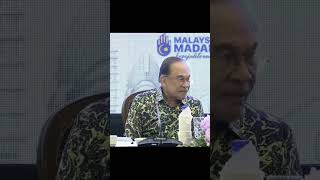
Prime Minister Anwar Ibrahim delivered one of his most emotional and direct remarks during the forum when discussing inequality, corruption and the struggle to genuinely uplift ordinary Malaysians.
Responding to concerns about low wages, stagnant social mobility and decades of neglect, Anwar said Malaysia could no longer tolerate a system where a small elite amasses enormous wealth while the majority continue struggling. He argued that many policies historically promoted as protecting Bumiputera interests had instead enriched a select few connected individuals.
Anwar questioned why society had remained silent for so long while corruption and abuse of power became normalized.
He said a “small breed” had been allowed to accumulate billions while many ordinary Malays, Indians, Chinese, Sabahans and Sarawakians continued facing hardship and marginalisation. According to him, the real issue was not rhetoric about racial survival, but whether policies truly benefited the masses or merely protected elites.
The Prime Minister stressed that governance reform and zero tolerance for corruption are central to raising the floor for Malaysians. He argued that genuine social mobility must come through education, transparent policies and fair economic opportunities — not through patronage or enrichment schemes disguised as assistance programs.
Anwar also acknowledged the frustration felt in Sabah and Sarawak, saying many communities there still feel ignored despite decades of promises. He admitted the government cannot solve every inherited problem within three years, but insisted reforms must begin now.
Throughout his remarks, Anwar repeatedly returned to one theme: courage. He said Malaysia must have the courage to abandon obsolete political narratives, confront entrenched corruption and rebuild institutions based on integrity and accountability.
His strongest moment came when he challenged political narratives surrounding Malay survival, asking whether leaders genuinely cared about poor Malay communities or were simply using the issue as a façade to protect corrupt interests and personal wealth.
Anwar ended by reaffirming that economic reform, anti-corruption measures and transparent governance are necessary if Malaysia truly wants inclusive growth that benefits the majority rather than a privileged minority.
#AnwarIbrahim #Malaysia #Madani #Governance #Corruption #AntiCorruption #Bumiputera #Economy #Wages #Poverty #SocialMobility #Malay #Sabah #Sarawak #MalaysianPolitics #Transparency #Accountability #Reform #Leadership #Education #EconomicGrowth #Inequality #PublicPolicy #Unity #CivilService #InstitutionalReform #MalaysiaMadani #HardcorePoor #PoliticalReform #Integrity #InclusiveGrowth #Policy #Economics #WealthGap #GoodGovernance
Prime Minister Anwar Ibrahim delivered one of his most emotional and direct remarks during the forum when discussing inequality, corruption and the struggle to genuinely uplift ordinary Malaysians.
Responding to concerns about low wages, stagnant social mobility and decades of neglect, Anwar said Malaysia could no longer tolerate a system where a small elite amasses enormous wealth while the majority continue struggling. He argued that many policies historically promoted as protecting Bumiputera interests had instead enriched a select few connected individuals.
Anwar questioned why society had remained silent for so long while corruption and abuse of power became normalized.
He said a “small breed” had been allowed to accumulate billions while many ordinary Malays, Indians, Chinese, Sabahans and Sarawakians continued facing hardship and marginalisation. According to him, the real issue was not rhetoric about racial survival, but whether policies truly benefited the masses or merely protected elites.
The Prime Minister stressed that governance reform and zero tolerance for corruption are central to raising the floor for Malaysians. He argued that genuine social mobility must come through education, transparent policies and fair economic opportunities — not through patronage or enrichment schemes disguised as assistance programs.
Anwar also acknowledged the frustration felt in Sabah and Sarawak, saying many communities there still feel ignored despite decades of promises. He admitted the government cannot solve every inherited problem within three years, but insisted reforms must begin now.
Throughout his remarks, Anwar repeatedly returned to one theme: courage. He said Malaysia must have the courage to abandon obsolete political narratives, confront entrenched corruption and rebuild institutions based on integrity and accountability.
His strongest moment came when he challenged political narratives surrounding Malay survival, asking whether leaders genuinely cared about poor Malay communities or were simply using the issue as a façade to protect corrupt interests and personal wealth.
Anwar ended by reaffirming that economic reform, anti-corruption measures and transparent governance are necessary if Malaysia truly wants inclusive growth that benefits the majority rather than a privileged minority.
#AnwarIbrahim #Malaysia #Madani #Governance #Corruption #AntiCorruption #Bumiputera #Economy #Wages #Poverty #SocialMobility #Malay #Sabah #Sarawak #MalaysianPolitics #Transparency #Accountability #Reform #Leadership #Education #EconomicGrowth #Inequality #PublicPolicy #Unity #CivilService #InstitutionalReform #MalaysiaMadani #HardcorePoor #PoliticalReform #Integrity #InclusiveGrowth #Policy #Economics #WealthGap #GoodGovernance