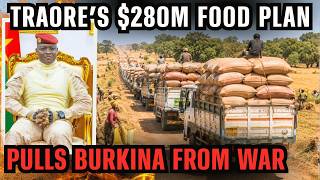
Ibrahim Traore’s $280 MILLION FOOD PLAN Is Pulling Burkina Faso Away From WAR
リアクション
2026年05月13日
Burkina Faso is attempting something few nations in West Africa have dared to prioritize during a time of growing instability. While many governments across the SAHEL continue increasing military budgets in response to rising violence and regional insecurity, Captain Ibrahim Traore has chosen a different path — investing heavily in agriculture, irrigation, grain storage, and long-term food security.
This story explores why the government of Burkina Faso believes national strength cannot rely on weapons alone. Instead, the country is pursuing a strategy centered on self-reliance, rural stability, and economic resilience. More than 164 billion CFA francs have now been directed toward agricultural expansion, including irrigation systems, subsidized fertilizer, improved seeds, and modern grain storage infrastructure designed to reduce dependence on imported food.
Across the SAHEL region, insecurity is deeply connected to poverty, unemployment, climate pressure, and collapsing rural economies. Burkina Faso’s leadership argues that if farming communities continue to weaken, instability will only grow worse. That is why agriculture is now being treated as part of national security itself.
Under Ibrahim Traore, the government is expanding irrigated farmland to protect harvests from drought and unpredictable rainfall. New storage facilities are being developed in major cities and regional areas to reduce post-harvest losses and improve national food reserves. Farmers are receiving direct support through subsidized agricultural programs designed to keep production alive despite rising global prices linked to international conflicts and supply chain disruptions.
The strategy also includes stricter monitoring systems. Digital voucher programs and Mobile Money payment systems are being used to reduce corruption and ensure that fertilizer and seeds reach real producers. Officials have warned that there will be zero tolerance for the theft or illegal resale of agricultural supplies intended for farmers.
Supporters believe this model could strengthen sovereignty across the region. Critics, however, question whether such large investments are sustainable while security challenges remain severe. International financial observers continue monitoring whether Burkina Faso can maintain funding, prevent corruption, and successfully manage such an ambitious agricultural transformation.
Still, many across Africa are paying close attention. The debate is no longer only about military power. It is about whether nations can remain independent if they cannot feed their own populations during periods of global uncertainty.
Within discussions surrounding the AFRICAN UNION and broader AFRICA NEWS analysis, Burkina Faso is increasingly being viewed as a test case for a different development model. Some observers inside the AES alliance believe this approach could inspire new strategies for regional resilience and long-term stability across the SAHEL.
The policies associated with Ibrahim Traore are also attracting attention far beyond Burkina Faso itself. From South Africa to wider Pan Africa discussions, many are debating whether true sovereignty begins with food production, rural development, and economic independence rather than external dependence.
This video examines the risks, the political stakes, and the larger geopolitical meaning behind Burkina Faso’s agricultural offensive. Can agriculture become a foundation for national recovery during one of the most unstable periods in modern West Africa? Or will security pressures and financial constraints make this strategy too difficult to sustain?
Share your thoughts in the comments. Does long-term stability begin with military strength, or with the ability of a nation to feed its own people?
#IbrahimTraore
#AfricanDiasporaNewsChannel
#BurkinaFaso
#BurkinaFasoPresident
#CaptainIbrahimTraore
#IbrahimTraoré
#PanAfricanism
#IbrahimTraoreBurkinaFaso
This story explores why the government of Burkina Faso believes national strength cannot rely on weapons alone. Instead, the country is pursuing a strategy centered on self-reliance, rural stability, and economic resilience. More than 164 billion CFA francs have now been directed toward agricultural expansion, including irrigation systems, subsidized fertilizer, improved seeds, and modern grain storage infrastructure designed to reduce dependence on imported food.
Across the SAHEL region, insecurity is deeply connected to poverty, unemployment, climate pressure, and collapsing rural economies. Burkina Faso’s leadership argues that if farming communities continue to weaken, instability will only grow worse. That is why agriculture is now being treated as part of national security itself.
Under Ibrahim Traore, the government is expanding irrigated farmland to protect harvests from drought and unpredictable rainfall. New storage facilities are being developed in major cities and regional areas to reduce post-harvest losses and improve national food reserves. Farmers are receiving direct support through subsidized agricultural programs designed to keep production alive despite rising global prices linked to international conflicts and supply chain disruptions.
The strategy also includes stricter monitoring systems. Digital voucher programs and Mobile Money payment systems are being used to reduce corruption and ensure that fertilizer and seeds reach real producers. Officials have warned that there will be zero tolerance for the theft or illegal resale of agricultural supplies intended for farmers.
Supporters believe this model could strengthen sovereignty across the region. Critics, however, question whether such large investments are sustainable while security challenges remain severe. International financial observers continue monitoring whether Burkina Faso can maintain funding, prevent corruption, and successfully manage such an ambitious agricultural transformation.
Still, many across Africa are paying close attention. The debate is no longer only about military power. It is about whether nations can remain independent if they cannot feed their own populations during periods of global uncertainty.
Within discussions surrounding the AFRICAN UNION and broader AFRICA NEWS analysis, Burkina Faso is increasingly being viewed as a test case for a different development model. Some observers inside the AES alliance believe this approach could inspire new strategies for regional resilience and long-term stability across the SAHEL.
The policies associated with Ibrahim Traore are also attracting attention far beyond Burkina Faso itself. From South Africa to wider Pan Africa discussions, many are debating whether true sovereignty begins with food production, rural development, and economic independence rather than external dependence.
This video examines the risks, the political stakes, and the larger geopolitical meaning behind Burkina Faso’s agricultural offensive. Can agriculture become a foundation for national recovery during one of the most unstable periods in modern West Africa? Or will security pressures and financial constraints make this strategy too difficult to sustain?
Share your thoughts in the comments. Does long-term stability begin with military strength, or with the ability of a nation to feed its own people?
#IbrahimTraore
#AfricanDiasporaNewsChannel
#BurkinaFaso
#BurkinaFasoPresident
#CaptainIbrahimTraore
#IbrahimTraoré
#PanAfricanism
#IbrahimTraoreBurkinaFaso