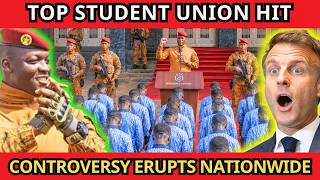
TRAORE Moves Against Burkina Faso's Most Influential Student Union — Criticism Intensifies
リアクション
2026年06月20日
Welcome back to the channel. Today’s story takes us to the heart of one of the most important political debates unfolding in modern Africa. In Burkina Faso, President Ibrahim Traoré’s government has made a controversial decision that has sparked strong reactions both at home and abroad: the suspension of the General Union of Burkinabe Students, widely known as UGEB.
At first glance, this may appear to be a dispute between a student organization and a government. But beneath the headlines lies a much deeper question—one that affects not only Burkina Faso, but many nations facing instability, terrorism, and political uncertainty. When a country is fighting for its survival, should security take priority over political freedoms? Or should democratic principles remain protected regardless of the circumstances?
To understand this debate, we must first examine the reality Burkina Faso has faced in recent years. Terrorist violence linked to extremist groups has devastated communities, displaced millions of people, disrupted education, and challenged the authority of the state across large areas of the country. In this environment, many citizens began questioning whether traditional political institutions were capable of delivering the most basic responsibility of government: security.
Supporters of Ibrahim Traoré argue that his leadership emerged in response to a national emergency. They believe that before any meaningful discussion about elections, constitutional reforms, or political competition can take place, the country must first restore stability and protect its citizens. From this perspective, national survival is not one political objective among many—it is the foundation upon which all other goals depend.
The suspension of UGEB became controversial because the organization publicly questioned whether years of military rule and increased military resources had produced significant improvements in security. Critics of the government viewed these questions as legitimate expressions of public accountability. Supporters of the government, however, argued that criticism of military efforts during an ongoing conflict risks weakening national unity at a time when cohesion is essential.
This disagreement reflects a broader conflict between two competing visions of governance. One side believes that open criticism strengthens society by exposing weaknesses and encouraging improvement. The other believes that excessive criticism during wartime can undermine morale and create vulnerabilities that hostile forces may exploit.
The story also highlights Ibrahim Traoré’s wider political philosophy. He has repeatedly challenged the assumption that Western political models should automatically serve as the standard for every nation. Instead, he argues that governments should be judged primarily by their ability to defend sovereignty, protect citizens, and preserve national stability. This message has resonated with many young Africans who believe that local realities should play a greater role in shaping political systems.
At the same time, international organizations and human rights groups have expressed concerns about restrictions on civil society and the concentration of power within transitional governments. They warn that emergency measures introduced during times of crisis can sometimes become permanent, creating long-term challenges for democratic governance and public accountability.
The debate surrounding Burkina Faso therefore extends far beyond one student organization. It raises questions about the balance between liberty and security, the meaning of sovereignty, and the future direction of governance across the continent. These are not simple issues with easy answers. Both supporters and critics of the government present arguments rooted in legitimate concerns about the future of the nation.
Across AFRICA, countries continue to wrestle with similar challenges as they seek solutions that reflect their own histories and realities. Discussions within the AFRICAN UNION increasingly focus on how nations can strengthen sovereignty while maintaining political legitimacy. From South Africa to the Sahel region, leaders and citizens are debating the future of governance in a changing world. The conversation also resonates throughout West Africa, where security concerns have transformed political priorities in several countries. Meanwhile, advocates of Pan Africa cooperation continue exploring how African nations can address common challenges while preserving independence and self-determination.
#IbrahimTraore
#BurkinaFaso
#CaptainIbrahimTraore
#IbrahimTraoré
#Goita
#MALI
#AES
At first glance, this may appear to be a dispute between a student organization and a government. But beneath the headlines lies a much deeper question—one that affects not only Burkina Faso, but many nations facing instability, terrorism, and political uncertainty. When a country is fighting for its survival, should security take priority over political freedoms? Or should democratic principles remain protected regardless of the circumstances?
To understand this debate, we must first examine the reality Burkina Faso has faced in recent years. Terrorist violence linked to extremist groups has devastated communities, displaced millions of people, disrupted education, and challenged the authority of the state across large areas of the country. In this environment, many citizens began questioning whether traditional political institutions were capable of delivering the most basic responsibility of government: security.
Supporters of Ibrahim Traoré argue that his leadership emerged in response to a national emergency. They believe that before any meaningful discussion about elections, constitutional reforms, or political competition can take place, the country must first restore stability and protect its citizens. From this perspective, national survival is not one political objective among many—it is the foundation upon which all other goals depend.
The suspension of UGEB became controversial because the organization publicly questioned whether years of military rule and increased military resources had produced significant improvements in security. Critics of the government viewed these questions as legitimate expressions of public accountability. Supporters of the government, however, argued that criticism of military efforts during an ongoing conflict risks weakening national unity at a time when cohesion is essential.
This disagreement reflects a broader conflict between two competing visions of governance. One side believes that open criticism strengthens society by exposing weaknesses and encouraging improvement. The other believes that excessive criticism during wartime can undermine morale and create vulnerabilities that hostile forces may exploit.
The story also highlights Ibrahim Traoré’s wider political philosophy. He has repeatedly challenged the assumption that Western political models should automatically serve as the standard for every nation. Instead, he argues that governments should be judged primarily by their ability to defend sovereignty, protect citizens, and preserve national stability. This message has resonated with many young Africans who believe that local realities should play a greater role in shaping political systems.
At the same time, international organizations and human rights groups have expressed concerns about restrictions on civil society and the concentration of power within transitional governments. They warn that emergency measures introduced during times of crisis can sometimes become permanent, creating long-term challenges for democratic governance and public accountability.
The debate surrounding Burkina Faso therefore extends far beyond one student organization. It raises questions about the balance between liberty and security, the meaning of sovereignty, and the future direction of governance across the continent. These are not simple issues with easy answers. Both supporters and critics of the government present arguments rooted in legitimate concerns about the future of the nation.
Across AFRICA, countries continue to wrestle with similar challenges as they seek solutions that reflect their own histories and realities. Discussions within the AFRICAN UNION increasingly focus on how nations can strengthen sovereignty while maintaining political legitimacy. From South Africa to the Sahel region, leaders and citizens are debating the future of governance in a changing world. The conversation also resonates throughout West Africa, where security concerns have transformed political priorities in several countries. Meanwhile, advocates of Pan Africa cooperation continue exploring how African nations can address common challenges while preserving independence and self-determination.
#IbrahimTraore
#BurkinaFaso
#CaptainIbrahimTraore
#IbrahimTraoré
#Goita
#MALI
#AES