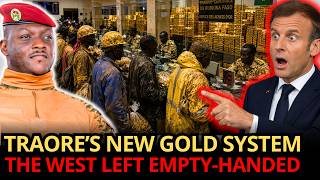
GAME CHANGER: TRAORE’S Historic GOLD Takeover Leaves Western Powers EMPTY-HANDED
リアクション
2026年05月28日
Burkina Faso is entering a new chapter in its fight for economic sovereignty, and the creation of FSMIB has sparked serious debate across Africa and beyond. Under the leadership of Captain IbrahimTraore, the country is no longer accepting the old system where foreign corporations extract wealth while local communities remain underdeveloped. Instead, this new strategy aims to place the nation’s gold resources under stronger national control and use them as a foundation for long-term development.
This story is bigger than mining. It is about power, independence, and the future of Africa. Across the continent, many people have questioned why resource-rich nations continue to struggle economically despite decades of exporting gold, uranium, oil, and other valuable minerals. Burkina Faso is now attempting to answer that question with action rather than speeches.
The FSMIB initiative is being described by analysts as a possible turning point in African economic policy. By restructuring how gold revenues are managed, the government hopes to redirect wealth into infrastructure, electricity, industrial production, education, and national security. Supporters argue that this could reduce dependency on foreign financial systems and create a stronger domestic economy capable of serving future generations.
At the center of the discussion is Ibrahim Traore, whose leadership style has attracted attention across the African continent and within the global AfricanDiasporaNewsChannel community. Many supporters see his policies as part of a wider Pan-African vision that challenges traditional economic relationships between African states and former colonial powers. Others remain cautious and wonder whether such ambitious reforms can survive external pressure and internal economic challenges.
The debate surrounding Burkina Faso also reflects a larger conversation about PanAfricanism and the future role of African nations in the global economy. Across social media, political forums, and international discussions, people are asking whether African countries should continue exporting raw resources under foreign-controlled systems or begin creating national strategies centered on sovereignty and industrial transformation.
One of the most controversial aspects of this story is the growing tension with France and the broader Western economic structure that has historically maintained strong influence in parts of West Africa. Critics of the old system argue that true independence cannot exist without economic independence. Supporters of the new direction believe Burkina Faso is attempting to create an entirely different model where national resources directly benefit the population instead of enriching outside interests.
Some observers compare the strategy to policies used by rising global powers that protected strategic industries during critical stages of national development. In this context, the FSMIB project is not simply about gold reserves. It represents a wider effort to build a modern state capable of controlling its own financial future while strengthening national institutions.
The African Union has not ignored these developments. Across the continent, leaders and citizens alike are watching closely to see whether this experiment can succeed. If successful, it could inspire other African governments to reconsider how they manage natural resources and national wealth. If it fails, critics will likely use it as evidence that resource nationalism cannot survive in today’s global system.
For many viewers of AFRICA RISING VIEW, this story represents more than politics. It symbolizes a deeper struggle over dignity, self-determination, and the right of African nations to define their own futures. Whether one agrees or disagrees with the methods being used, there is no denying that Burkina Faso has become one of the most discussed examples of Africa new political and economic thinking.
The world is now watching to see whether FSMIB becomes a revolutionary financial model or another contested chapter in the long history of African resource politics. Either way, the conversation it has started is already reshaping debates about sovereignty, leadership, and economic freedom across the continent.
#IbrahimTraore
#BurkinaFaso
#CaptainIbrahimTraore
#IbrahimTraoré
#Goita
#Maliwar
#Kidal
#MALI
#AES
This story is bigger than mining. It is about power, independence, and the future of Africa. Across the continent, many people have questioned why resource-rich nations continue to struggle economically despite decades of exporting gold, uranium, oil, and other valuable minerals. Burkina Faso is now attempting to answer that question with action rather than speeches.
The FSMIB initiative is being described by analysts as a possible turning point in African economic policy. By restructuring how gold revenues are managed, the government hopes to redirect wealth into infrastructure, electricity, industrial production, education, and national security. Supporters argue that this could reduce dependency on foreign financial systems and create a stronger domestic economy capable of serving future generations.
At the center of the discussion is Ibrahim Traore, whose leadership style has attracted attention across the African continent and within the global AfricanDiasporaNewsChannel community. Many supporters see his policies as part of a wider Pan-African vision that challenges traditional economic relationships between African states and former colonial powers. Others remain cautious and wonder whether such ambitious reforms can survive external pressure and internal economic challenges.
The debate surrounding Burkina Faso also reflects a larger conversation about PanAfricanism and the future role of African nations in the global economy. Across social media, political forums, and international discussions, people are asking whether African countries should continue exporting raw resources under foreign-controlled systems or begin creating national strategies centered on sovereignty and industrial transformation.
One of the most controversial aspects of this story is the growing tension with France and the broader Western economic structure that has historically maintained strong influence in parts of West Africa. Critics of the old system argue that true independence cannot exist without economic independence. Supporters of the new direction believe Burkina Faso is attempting to create an entirely different model where national resources directly benefit the population instead of enriching outside interests.
Some observers compare the strategy to policies used by rising global powers that protected strategic industries during critical stages of national development. In this context, the FSMIB project is not simply about gold reserves. It represents a wider effort to build a modern state capable of controlling its own financial future while strengthening national institutions.
The African Union has not ignored these developments. Across the continent, leaders and citizens alike are watching closely to see whether this experiment can succeed. If successful, it could inspire other African governments to reconsider how they manage natural resources and national wealth. If it fails, critics will likely use it as evidence that resource nationalism cannot survive in today’s global system.
For many viewers of AFRICA RISING VIEW, this story represents more than politics. It symbolizes a deeper struggle over dignity, self-determination, and the right of African nations to define their own futures. Whether one agrees or disagrees with the methods being used, there is no denying that Burkina Faso has become one of the most discussed examples of Africa new political and economic thinking.
The world is now watching to see whether FSMIB becomes a revolutionary financial model or another contested chapter in the long history of African resource politics. Either way, the conversation it has started is already reshaping debates about sovereignty, leadership, and economic freedom across the continent.
#IbrahimTraore
#BurkinaFaso
#CaptainIbrahimTraore
#IbrahimTraoré
#Goita
#Maliwar
#Kidal
#MALI
#AES