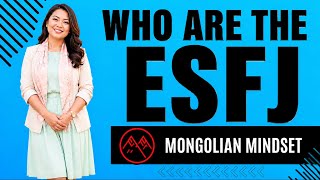
The Best ESFJ Personality Breakdown: Who Are The Caregiver
リアクション
2026年06月12日
Who are the ESFJs really?
In this Mongolian Mindset breakdown, we go deep into the ESFJ personality type beyond the basic “nice helper” stereotype. We cover the ESFJ from a holistic view, Interaction Styles, cognitive functions, grip stress, one-sidedness, Ti inferior development, and ESFJ subtypes.
The ESFJ is a Fe Hero type, meaning they naturally track the emotional atmosphere, social expectations, group values, and relational needs around them. They often know how to make people feel included, supported, and connected. But ESFJs are not just friendly. With Si Parent, they also care about stability, loyalty, precedent, responsibility, tradition, and preserving what has worked before.
In this video, we break down the full ESFJ structure:
Fe Hero — social awareness, emotional intelligence, harmony, connection, and group values.
Si Parent — memory, duty, reliability, tradition, and protecting what is familiar.
Ne Child — playful possibility, social optimism, humor, and imagining new ways to connect people.
Ti Inferior — insecurity with logic, consistency, personal understanding, and unpacking complicated theories.
We also go through the shadow functions:
Fi Opposing — learning to develop a personal moral code instead of only following the room.
Se Critic — sharp awareness of appearances, present behavior, and what feels “off” in the environment.
Ni Trickster — difficulty narrowing life into one singular future vision, sometimes mistaking temporary emotional momentum for destiny.
Te Demon — resistance to cold efficiency, external metrics, and impersonal systems when they threaten human connection.
This episode also explains the Fe-Ne loop, Si Parent to Se Critic, Ni Trickster, Fi Opposing, Ti Inferior growth, grip stress, one-sidedness, and the different ESFJ subtypes. Not every ESFJ looks the same. Some are warm and nurturing, some are dutiful and traditional, some are socially ambitious, some are playful and expressive, and some become controlling under stress. But the core pattern still comes back to Fe-Si-Ne-Ti.
This is the full Mongolian Mindset breakdown of the ESFJ: their strengths, weaknesses, growth path, blind spots, and how they become more balanced over time.
Welcome to Mongolian Mindset.
Join the Mongolian Mindset community:
Website: https://mongolianmindset.org/celebrity-list
Discord: https://discord.com/invite/mongolian-mindset
Facebook Group: https://www.facebook.com/share/g/1CWPnaaRzJ/
Topics covered:
ESFJ personality type, ESFJ cognitive functions, ESFJ 8-function model, Fe Hero, Si Parent, Ne Child, Ti Inferior, Fi Opposing, Se Critic, Ni Trickster, Te Demon, ESFJ Interaction Style, ESFJ grip stress, ESFJ subtypes, ESFJ one-sidedness, ESFJ growth, MBTI, John Beebe, Linda Berens, Mongolian Mindset.
#ESFJ #MBTI #CognitiveFunctions #MongolianMindset #PersonalityTypes #FeHero #SiParent #TiInferior #JohnBeebe #InteractionStyles
In this Mongolian Mindset breakdown, we go deep into the ESFJ personality type beyond the basic “nice helper” stereotype. We cover the ESFJ from a holistic view, Interaction Styles, cognitive functions, grip stress, one-sidedness, Ti inferior development, and ESFJ subtypes.
The ESFJ is a Fe Hero type, meaning they naturally track the emotional atmosphere, social expectations, group values, and relational needs around them. They often know how to make people feel included, supported, and connected. But ESFJs are not just friendly. With Si Parent, they also care about stability, loyalty, precedent, responsibility, tradition, and preserving what has worked before.
In this video, we break down the full ESFJ structure:
Fe Hero — social awareness, emotional intelligence, harmony, connection, and group values.
Si Parent — memory, duty, reliability, tradition, and protecting what is familiar.
Ne Child — playful possibility, social optimism, humor, and imagining new ways to connect people.
Ti Inferior — insecurity with logic, consistency, personal understanding, and unpacking complicated theories.
We also go through the shadow functions:
Fi Opposing — learning to develop a personal moral code instead of only following the room.
Se Critic — sharp awareness of appearances, present behavior, and what feels “off” in the environment.
Ni Trickster — difficulty narrowing life into one singular future vision, sometimes mistaking temporary emotional momentum for destiny.
Te Demon — resistance to cold efficiency, external metrics, and impersonal systems when they threaten human connection.
This episode also explains the Fe-Ne loop, Si Parent to Se Critic, Ni Trickster, Fi Opposing, Ti Inferior growth, grip stress, one-sidedness, and the different ESFJ subtypes. Not every ESFJ looks the same. Some are warm and nurturing, some are dutiful and traditional, some are socially ambitious, some are playful and expressive, and some become controlling under stress. But the core pattern still comes back to Fe-Si-Ne-Ti.
This is the full Mongolian Mindset breakdown of the ESFJ: their strengths, weaknesses, growth path, blind spots, and how they become more balanced over time.
Welcome to Mongolian Mindset.
Join the Mongolian Mindset community:
Website: https://mongolianmindset.org/celebrity-list
Discord: https://discord.com/invite/mongolian-mindset
Facebook Group: https://www.facebook.com/share/g/1CWPnaaRzJ/
Topics covered:
ESFJ personality type, ESFJ cognitive functions, ESFJ 8-function model, Fe Hero, Si Parent, Ne Child, Ti Inferior, Fi Opposing, Se Critic, Ni Trickster, Te Demon, ESFJ Interaction Style, ESFJ grip stress, ESFJ subtypes, ESFJ one-sidedness, ESFJ growth, MBTI, John Beebe, Linda Berens, Mongolian Mindset.
#ESFJ #MBTI #CognitiveFunctions #MongolianMindset #PersonalityTypes #FeHero #SiParent #TiInferior #JohnBeebe #InteractionStyles