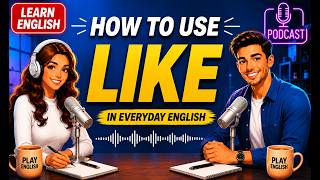
Learn English Podcast | Real Conversations | How to Use "Like" in Everyday English
リアクション
2026年06月30日
Learn English Podcast | Real Conversations | How to Use "Like" in Everyday English
Confused about how to use LIKE in English? Learn all the different ways native speakers use LIKE in real spoken English — so you can sound more natural, confident, and fluent in everyday conversations.
In this real conversation English podcast episode, Emma and Nico break down how native speakers really use LIKE — as a verb, for comparisons, in common expressions, and in casual spoken English — without memorizing complicated grammar rules.
────────────────────────
🎯 How Native Speakers Really Use LIKE
This episode focuses on one of the most common and powerful words in English: LIKE.
Most English learners only know one meaning of LIKE. But native speakers use it in many different ways every single day.
Instead of textbook grammar, you'll learn how LIKE actually works in real conversations — through natural dialogue, clear explanations, storytelling, listening practice, and shadowing exercises.
You'll clearly understand:
• LIKE as a verb (I like coffee. I like swimming.)
• LIKE for comparisons (looks like, sounds like, feels like)
• LIKE with the five senses
• JUST LIKE
• NOTHING LIKE
• THERE'S NOTHING LIKE
• ACTS LIKE
• UNLIKE
• I FEEL LIKE
• IT'S LIKE
• SOMETHING LIKE THAT
• SEEMS LIKE
• The spoken "I was like..."
• Casual filler LIKE in everyday conversation
────────────────────────
Move past unnatural textbook English like:
❌ "I like swim."
❌ "He like dogs."
❌ Confusing "I was like..." with comparisons.
❌ Only using LIKE to mean "enjoy."
and learn how native speakers naturally say:
✅ "I like travelling."
✅ "She likes cooking."
✅ "It looks like rain."
✅ "This tastes like chocolate."
✅ "I feel like going for a walk."
✅ "It's like riding a bike."
✅ "We could meet at seven, or something like that."
✅ "I was like... are you serious?"
✅ "She was like... I can't believe it."
✅ "There is nothing like a good night's sleep."
────────────────────────
🧠 In This Episode, You Will Learn:
✅ The different meanings of LIKE in everyday English
✅ The grammar rule after LIKE (noun vs verb + ING)
✅ Common mistakes English learners make with LIKE
✅ How native speakers use LIKE naturally in conversation
✅ The difference between LIKE meaning "enjoy" and LIKE meaning "similar to"
✅ How to use looks like, sounds like, feels like, tastes like, and smells like
✅ The difference between "nothing like" and "there's nothing like"
✅ How to use I feel like, it's like, seems like, and something like that
✅ What "I was like..." really means in spoken English
✅ When LIKE is appropriate in casual English but not formal English
✅ English listening and speaking practice through natural dialogue
✅ Shadowing practice to build natural English fluency
────────────────────────
🌟 The Play English Method:
🔹 Learn English through real conversations, not textbook rules
🔹 Hear slow, clear, natural spoken English
🔹 Understand how grammar feels in everyday conversation
🔹 Improve pronunciation, rhythm, and natural speaking flow
🔹 Build speaking confidence step by step
🔹 Learn practical English you can use immediately
────────────────────────
🚀 Perfect For:
✅ Beginner to Intermediate English learners
✅ ESL / EFL students
✅ Learners confused about how to use LIKE
✅ Students improving spoken English
✅ English listening practice and conversation practice
✅ Self-learners who enjoy podcast-style English lessons
✅ Anyone who wants to speak English more naturally and confidently
────────────────────────
🎁 What You'll Take Away:
🎯 Clear understanding of every major use of LIKE
🎯 Confidence using LIKE naturally in conversation
🎯 Better English listening comprehension
🎯 More natural spoken English
🎯 Fewer grammar mistakes in everyday conversations
────────────────────────
📘 Vocabulary & Phrase Highlights:
like, I was like, I feel like, it's like, looks like, sounds like, feels like, tastes like, smells like, just like, nothing like, there's nothing like, acts like, unlike, something like that, seems like, spoken English, English conversation practice, English listening practice, everyday English, English grammar explained
────────────────────────
📌 Subscribe for real conversation English podcasts that help you speak naturally, confidently, and comfortably in everyday life.
🔑 Keywords:
learn english podcast, how to use like in english, like meaning in english, how native speakers use like, spoken english podcast, real english conversations, english listening practice, english conversation practice, everyday english, natural english, english fluency, english learning podcast, esl podcast, english grammar explained, i was like meaning, i feel like meaning, english vocabulary lesson, everyday spoken english
#PlayEnglishPodcast #PlayEnglish #HowToUseLike
#LearnEnglish #EnglishPodcast #SpokenEnglish
#RealEnglish #EnglishConversationPractice #EnglishListeningPractice
#EverydayEnglish #EnglishGrammar #DailyEnglish
#ESL #EFL #EnglishVocabulary
Confused about how to use LIKE in English? Learn all the different ways native speakers use LIKE in real spoken English — so you can sound more natural, confident, and fluent in everyday conversations.
In this real conversation English podcast episode, Emma and Nico break down how native speakers really use LIKE — as a verb, for comparisons, in common expressions, and in casual spoken English — without memorizing complicated grammar rules.
────────────────────────
🎯 How Native Speakers Really Use LIKE
This episode focuses on one of the most common and powerful words in English: LIKE.
Most English learners only know one meaning of LIKE. But native speakers use it in many different ways every single day.
Instead of textbook grammar, you'll learn how LIKE actually works in real conversations — through natural dialogue, clear explanations, storytelling, listening practice, and shadowing exercises.
You'll clearly understand:
• LIKE as a verb (I like coffee. I like swimming.)
• LIKE for comparisons (looks like, sounds like, feels like)
• LIKE with the five senses
• JUST LIKE
• NOTHING LIKE
• THERE'S NOTHING LIKE
• ACTS LIKE
• UNLIKE
• I FEEL LIKE
• IT'S LIKE
• SOMETHING LIKE THAT
• SEEMS LIKE
• The spoken "I was like..."
• Casual filler LIKE in everyday conversation
────────────────────────
Move past unnatural textbook English like:
❌ "I like swim."
❌ "He like dogs."
❌ Confusing "I was like..." with comparisons.
❌ Only using LIKE to mean "enjoy."
and learn how native speakers naturally say:
✅ "I like travelling."
✅ "She likes cooking."
✅ "It looks like rain."
✅ "This tastes like chocolate."
✅ "I feel like going for a walk."
✅ "It's like riding a bike."
✅ "We could meet at seven, or something like that."
✅ "I was like... are you serious?"
✅ "She was like... I can't believe it."
✅ "There is nothing like a good night's sleep."
────────────────────────
🧠 In This Episode, You Will Learn:
✅ The different meanings of LIKE in everyday English
✅ The grammar rule after LIKE (noun vs verb + ING)
✅ Common mistakes English learners make with LIKE
✅ How native speakers use LIKE naturally in conversation
✅ The difference between LIKE meaning "enjoy" and LIKE meaning "similar to"
✅ How to use looks like, sounds like, feels like, tastes like, and smells like
✅ The difference between "nothing like" and "there's nothing like"
✅ How to use I feel like, it's like, seems like, and something like that
✅ What "I was like..." really means in spoken English
✅ When LIKE is appropriate in casual English but not formal English
✅ English listening and speaking practice through natural dialogue
✅ Shadowing practice to build natural English fluency
────────────────────────
🌟 The Play English Method:
🔹 Learn English through real conversations, not textbook rules
🔹 Hear slow, clear, natural spoken English
🔹 Understand how grammar feels in everyday conversation
🔹 Improve pronunciation, rhythm, and natural speaking flow
🔹 Build speaking confidence step by step
🔹 Learn practical English you can use immediately
────────────────────────
🚀 Perfect For:
✅ Beginner to Intermediate English learners
✅ ESL / EFL students
✅ Learners confused about how to use LIKE
✅ Students improving spoken English
✅ English listening practice and conversation practice
✅ Self-learners who enjoy podcast-style English lessons
✅ Anyone who wants to speak English more naturally and confidently
────────────────────────
🎁 What You'll Take Away:
🎯 Clear understanding of every major use of LIKE
🎯 Confidence using LIKE naturally in conversation
🎯 Better English listening comprehension
🎯 More natural spoken English
🎯 Fewer grammar mistakes in everyday conversations
────────────────────────
📘 Vocabulary & Phrase Highlights:
like, I was like, I feel like, it's like, looks like, sounds like, feels like, tastes like, smells like, just like, nothing like, there's nothing like, acts like, unlike, something like that, seems like, spoken English, English conversation practice, English listening practice, everyday English, English grammar explained
────────────────────────
📌 Subscribe for real conversation English podcasts that help you speak naturally, confidently, and comfortably in everyday life.
🔑 Keywords:
learn english podcast, how to use like in english, like meaning in english, how native speakers use like, spoken english podcast, real english conversations, english listening practice, english conversation practice, everyday english, natural english, english fluency, english learning podcast, esl podcast, english grammar explained, i was like meaning, i feel like meaning, english vocabulary lesson, everyday spoken english
#PlayEnglishPodcast #PlayEnglish #HowToUseLike
#LearnEnglish #EnglishPodcast #SpokenEnglish
#RealEnglish #EnglishConversationPractice #EnglishListeningPractice
#EverydayEnglish #EnglishGrammar #DailyEnglish
#ESL #EFL #EnglishVocabulary