NONE IS vs NONE ARE: The 100-Year-Old Grammar Argument | English Podcast for Beginners
リアクション
2026年07月15日
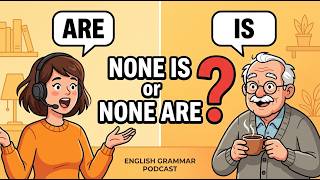
None IS or None ARE?" — The 100-Year-Old Grammar Argument, Finally Solved | Plain English Podcast
Is it "none of my friends is coming" or "none of my friends are coming"? This one grammar question has confused English learners and native speakers for generations — and in this episode, we're settling it once and for all.
In this episode of Plain English Podcast, Emily breaks down:
✅ Why the "none is always singular" rule you learned in school isn't historically accurate
✅ How Shakespeare and the King James Bible actually used "none" with plural verbs
✅ The simple trick to know when to use "none is" vs "none are"
✅ Real-life examples (donuts, money, friends) that make the rule easy to remember forever
✅ What native English speakers actually say in everyday conversation vs. formal writing
Whether you're learning English as a second language, prepping for IELTS/TOEFL, or just a grammar nerd who loves a good language mystery — this episode gives you a rule you'll actually remember and use.
🎧 Perfect for: English learners, ESL students, grammar enthusiasts, podcast lovers, anyone who's ever argued about grammar with family.
👉 Subscribe for more real, practical English lessons — no boring textbook rules, just how English actually works.
💬 Let us know in the comments: do YOU say "none is" or "none are"?
#LearnEnglish #EnglishGrammar #ESL #PlainEnglish #EnglishPodcast #GrammarTips #EnglishLearning #SpokenEnglish #IELTS #TOEFL #EnglishTeacher #NoneIsOrNoneAre
Keywords
none is or none are, English grammar podcast, learn English grammar, none singular or plural, English grammar rules, ESL grammar tips, plain english podcast, grammar mistakes english, spoken english grammar
Is it "none of my friends is coming" or "none of my friends are coming"? This one grammar question has confused English learners and native speakers for generations — and in this episode, we're settling it once and for all.
In this episode of Plain English Podcast, Emily breaks down:
✅ Why the "none is always singular" rule you learned in school isn't historically accurate
✅ How Shakespeare and the King James Bible actually used "none" with plural verbs
✅ The simple trick to know when to use "none is" vs "none are"
✅ Real-life examples (donuts, money, friends) that make the rule easy to remember forever
✅ What native English speakers actually say in everyday conversation vs. formal writing
Whether you're learning English as a second language, prepping for IELTS/TOEFL, or just a grammar nerd who loves a good language mystery — this episode gives you a rule you'll actually remember and use.
🎧 Perfect for: English learners, ESL students, grammar enthusiasts, podcast lovers, anyone who's ever argued about grammar with family.
👉 Subscribe for more real, practical English lessons — no boring textbook rules, just how English actually works.
💬 Let us know in the comments: do YOU say "none is" or "none are"?
#LearnEnglish #EnglishGrammar #ESL #PlainEnglish #EnglishPodcast #GrammarTips #EnglishLearning #SpokenEnglish #IELTS #TOEFL #EnglishTeacher #NoneIsOrNoneAre
Keywords
none is or none are, English grammar podcast, learn English grammar, none singular or plural, English grammar rules, ESL grammar tips, plain english podcast, grammar mistakes english, spoken english grammar