How To Read People Without Guessing | Learn English Through Psychology | English Listening Practice
リアクション
2026年09月18日
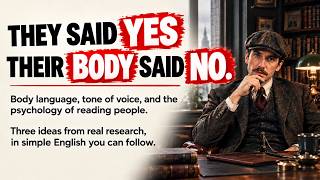
Someone says "yes" while their body says something else. Can you really tell?
And here is the stranger part. The advice everyone gives you about understanding other people has been tested, and it does not work.
This is English listening practice for intermediate learners, and a piece of real psychology: how to read people without guessing. We look at what body language actually tells you, what the voice shows that the face hides, and the one small thing that beats both. Slow, clear English, with a real study behind every claim.
This video teaches English vocabulary and listening through psychology. The English is slow, clear, and built for learners at B1 and B2 level. Nothing is rushed, and every important word is explained inside the video.
WHAT YOU WILL LEARN
- The Face — why the face tells you least at the exact moment feelings are strongest
- The Voice — why tone is much harder to fake than a facial expression
- The Question — why "put yourself in their shoes" fails, and what works instead
- How to ask a real question instead of a guess with a question mark on the end
CHAPTERS
0:00 They said yes. Their body said no.
0:38 The Face — beaten by body language
3:29 The Voice — the group that only listened won
4:49 Your face lies better than your tone of voice
7:56 The Question — 25 tests, one failed advice
9:29 What actually worked took five minutes
10:44 The question that is really a guess
12:11 How to read people in 3 real moments
13:33 You do not have to guess. Just ask.
VOCABULARY IN THIS VIDEO
- body language — the way people sit, stand, and move
- tone — how the words sound, not the words themselves
- a sign — something that shows you what is happening
- to control — to decide how something looks or sounds
- to notice — to see or hear something you were not looking for
- to be sure — to feel certain that something is true
RESEARCH MENTIONED
- Researchers who study lying have found that looking away, on its own, tells you very little about whether someone is telling the truth.
- Scientists in Israel showed people photos of tennis players at the moment they won or lost a point. People who saw only the face could not say which. People who saw the body could.
- A team at Yale put people together to talk in three ways: seeing and hearing, seeing only, and hearing only. The people who could only hear understood feelings best.
- Scientists in America and Israel tested "imagine you are the other person" again and again. It did not improve accuracy. Asking the person directly did.
HOW TO USE THIS VIDEO TO PRACTISE ENGLISH
1. Listen once without subtitles. Do not stop. Just follow the story.
2. Listen again with subtitles on and write down every new word.
3. Listen a third time and repeat each sentence out loud after the narrator.
4. Tell someone what the video said, in your own words. This is the step most learners skip, and it is the one that makes the English stay.
WATCH NEXT
This video ends on something uncomfortable: the people in that last study felt exactly as sure as each other, whether they were right or wrong. Feeling sure tells you nothing. If that idea stayed with you, the next video is about why the people who feel most certain often know the least.
Feeling Sure Does Not Mean You Are Right
ABOUT THIS CHANNEL
English Codex. One idea per video, explained in simple English, built on real psychology research. New video every few days.
WHO THIS VIDEO IS FOR
B1 and B2 English learners who want listening practice with real content. Useful for IELTS and TOEFL listening practice, for anyone preparing for job interviews in English, and for anyone who has ever walked away from a conversation not knowing what the other person actually felt.
#LearnEnglish #EnglishListeningPractice #EnglishPodcast
And here is the stranger part. The advice everyone gives you about understanding other people has been tested, and it does not work.
This is English listening practice for intermediate learners, and a piece of real psychology: how to read people without guessing. We look at what body language actually tells you, what the voice shows that the face hides, and the one small thing that beats both. Slow, clear English, with a real study behind every claim.
This video teaches English vocabulary and listening through psychology. The English is slow, clear, and built for learners at B1 and B2 level. Nothing is rushed, and every important word is explained inside the video.
WHAT YOU WILL LEARN
- The Face — why the face tells you least at the exact moment feelings are strongest
- The Voice — why tone is much harder to fake than a facial expression
- The Question — why "put yourself in their shoes" fails, and what works instead
- How to ask a real question instead of a guess with a question mark on the end
CHAPTERS
0:00 They said yes. Their body said no.
0:38 The Face — beaten by body language
3:29 The Voice — the group that only listened won
4:49 Your face lies better than your tone of voice
7:56 The Question — 25 tests, one failed advice
9:29 What actually worked took five minutes
10:44 The question that is really a guess
12:11 How to read people in 3 real moments
13:33 You do not have to guess. Just ask.
VOCABULARY IN THIS VIDEO
- body language — the way people sit, stand, and move
- tone — how the words sound, not the words themselves
- a sign — something that shows you what is happening
- to control — to decide how something looks or sounds
- to notice — to see or hear something you were not looking for
- to be sure — to feel certain that something is true
RESEARCH MENTIONED
- Researchers who study lying have found that looking away, on its own, tells you very little about whether someone is telling the truth.
- Scientists in Israel showed people photos of tennis players at the moment they won or lost a point. People who saw only the face could not say which. People who saw the body could.
- A team at Yale put people together to talk in three ways: seeing and hearing, seeing only, and hearing only. The people who could only hear understood feelings best.
- Scientists in America and Israel tested "imagine you are the other person" again and again. It did not improve accuracy. Asking the person directly did.
HOW TO USE THIS VIDEO TO PRACTISE ENGLISH
1. Listen once without subtitles. Do not stop. Just follow the story.
2. Listen again with subtitles on and write down every new word.
3. Listen a third time and repeat each sentence out loud after the narrator.
4. Tell someone what the video said, in your own words. This is the step most learners skip, and it is the one that makes the English stay.
WATCH NEXT
This video ends on something uncomfortable: the people in that last study felt exactly as sure as each other, whether they were right or wrong. Feeling sure tells you nothing. If that idea stayed with you, the next video is about why the people who feel most certain often know the least.
Feeling Sure Does Not Mean You Are Right
ABOUT THIS CHANNEL
English Codex. One idea per video, explained in simple English, built on real psychology research. New video every few days.
WHO THIS VIDEO IS FOR
B1 and B2 English learners who want listening practice with real content. Useful for IELTS and TOEFL listening practice, for anyone preparing for job interviews in English, and for anyone who has ever walked away from a conversation not knowing what the other person actually felt.
#LearnEnglish #EnglishListeningPractice #EnglishPodcast