TitleEU Commission Full Briefing 01/06/2026 - Russia Threats, China Clash, Ukraine Drones, AI
リアクション
2026年06月01日
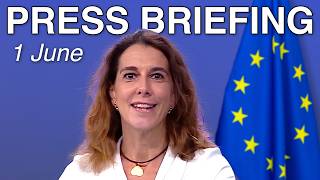
The European Commission’s Midday press briefing of 1 June 2026 covered a wide range of foreign policy, defence, digital and internal EU issues.
This is an edited (transformative) version created to improve accessibility. Edits that add transformative value include cutting repetition, silences, and stutters; restructuring the content by theme and topic; adding on-screen context; and enhancing video and audio quality. This edited version does not distort the meaning or message of the original video.
Commission spokespeople were asked about political developments in Hungary, Russia’s pressure on Armenia, and the EU’s response after a Russian drone crash in Romania. The briefing also addressed Italy’s questions around energy prices and fiscal flexibility, the SAFE defence loan instrument, and the state of discussions with Hungary on defence funding and transparency safeguards.
Ukraine was a major focus, with questions on the planned €9.1 billion disbursement under the EU’s €90 billion assistance package, including €5.9 billion for defence purposes, particularly drones, and €3.2 billion for budget support. The Commission also responded to questions about the future of temporary protection for Ukrainian refugees after March 2027.
A large part of the briefing focused on EU-China relations following the Commission’s internal orientation debate on China. Spokespeople discussed the EU’s position on de-risking, trade imbalances, overcapacity, subsidies, market access barriers, export restrictions, and the importance of a united EU approach.
Other topics included possible Russia sanctions and Rusal, the Venice Biennale grant issue, Commissioner political activity in Malta, reports on Anthropic’s AI model access for EU cyber actors, the situation in Lebanon, Bosnia and Herzegovina’s High Representative, Albania’s EU accession process, and the launch of the EU Talent Pool.
Chapters
00:00 Hungary rule of law
00:40 Armenia and Russia
04:42 Romania drone crash
06:15 Meloni energy letter
07:54 SAFE deadline
10:03 Italy SAFE loans
11:26 Hungary SAFE plan
13:30 Biennale grant
14:19 Ukraine loan package
18:05 Malta campaign rules
20:26 Ukraine protection
22:18 EU-China tensions
25:29 EU unity on China
26:52 China readout wording
28:36 China subsidies
31:52 China as partner
34:23 Rusal sanctions
36:17 Anthropic AI model
39:17 Lebanon escalation
41:01 Lebanon mission
42:19 Bosnia High Rep
43:10 Albania accession
45:16 EU Talent Pool
Europe Echo
https://europeecho.com
https://www.instagram.com/EuropeEcho
https://www.tiktok.com/@EuropeEcho
https://www.facebook.com/EuropeEcho
https://twitter.com/EuropeEcho
Uploaded by James Tamim, EU Digital Policy analyst.
© European Union, 2026
Edits applied by Europe Echo (transformative value add): repetition, silences, and stutters removed; content restructured by theme so questions and answers stay together and topics remain organised (some sections may be reordered to separate topics more clearly); on-screen context and detailed descriptions added (topic labels, chapters, captions) to make long briefings easier to follow; and video/audio quality enhanced (cropping, splicing the correct audio-language tracks, voice isolation, and colour correction).
This is an edited (transformative) version created to improve accessibility. Edits that add transformative value include cutting repetition, silences, and stutters; restructuring the content by theme and topic; adding on-screen context; and enhancing video and audio quality. This edited version does not distort the meaning or message of the original video.
Commission spokespeople were asked about political developments in Hungary, Russia’s pressure on Armenia, and the EU’s response after a Russian drone crash in Romania. The briefing also addressed Italy’s questions around energy prices and fiscal flexibility, the SAFE defence loan instrument, and the state of discussions with Hungary on defence funding and transparency safeguards.
Ukraine was a major focus, with questions on the planned €9.1 billion disbursement under the EU’s €90 billion assistance package, including €5.9 billion for defence purposes, particularly drones, and €3.2 billion for budget support. The Commission also responded to questions about the future of temporary protection for Ukrainian refugees after March 2027.
A large part of the briefing focused on EU-China relations following the Commission’s internal orientation debate on China. Spokespeople discussed the EU’s position on de-risking, trade imbalances, overcapacity, subsidies, market access barriers, export restrictions, and the importance of a united EU approach.
Other topics included possible Russia sanctions and Rusal, the Venice Biennale grant issue, Commissioner political activity in Malta, reports on Anthropic’s AI model access for EU cyber actors, the situation in Lebanon, Bosnia and Herzegovina’s High Representative, Albania’s EU accession process, and the launch of the EU Talent Pool.
Chapters
00:00 Hungary rule of law
00:40 Armenia and Russia
04:42 Romania drone crash
06:15 Meloni energy letter
07:54 SAFE deadline
10:03 Italy SAFE loans
11:26 Hungary SAFE plan
13:30 Biennale grant
14:19 Ukraine loan package
18:05 Malta campaign rules
20:26 Ukraine protection
22:18 EU-China tensions
25:29 EU unity on China
26:52 China readout wording
28:36 China subsidies
31:52 China as partner
34:23 Rusal sanctions
36:17 Anthropic AI model
39:17 Lebanon escalation
41:01 Lebanon mission
42:19 Bosnia High Rep
43:10 Albania accession
45:16 EU Talent Pool
Europe Echo
https://europeecho.com
https://www.instagram.com/EuropeEcho
https://www.tiktok.com/@EuropeEcho
https://www.facebook.com/EuropeEcho
https://twitter.com/EuropeEcho
Uploaded by James Tamim, EU Digital Policy analyst.
© European Union, 2026
Edits applied by Europe Echo (transformative value add): repetition, silences, and stutters removed; content restructured by theme so questions and answers stay together and topics remain organised (some sections may be reordered to separate topics more clearly); on-screen context and detailed descriptions added (topic labels, chapters, captions) to make long briefings easier to follow; and video/audio quality enhanced (cropping, splicing the correct audio-language tracks, voice isolation, and colour correction).